Everything you must know before landing at Hugo Chávez International Airport. Safety, transport, where to stay, costs, and insider secrets from a local host.
Planning your first trip to northern Haiti? These Cap Haitien Haiti travel tips will save you hours of research, hundreds of dollars, and a lot of stress. Cap-Haïtien is Haiti’s second-largest city and the gateway to the UNESCO Citadelle Laferrière. Unlike Port-au-Prince, it stays accessible and relatively safe for prepared travelers.
01. Land Smart at Hugo Chávez Airport (CAP)
Your first 30 minutes in Cap Haitien sets the tone for your entire trip.
Hugo Chávez International Airport (CAP) is small and efficient. It sits just 10-20 minutes from the city center. But arriving without a plan makes you vulnerable.
- Airport pickup: Pre-booked hotel transfer is safest. Taxis run $10-20. Moto-taxis cost $1-2 for solo travelers.
- Currency: Have small US dollar bills ready. Airport ATMs are unreliable.
- Tourist fee: $10 USD on arrival. Bring exact change.
- Documents: Passport with 6+ months left, return ticket, and hotel confirmation.
- Wi-Fi: Spotty at best. Download offline maps before you land.

02. Where You Should Stay: Vaudreuil vs. Downtown
Not all places in Cap Haitien are equal.
The Vaudreuil district on Route Nationale #1 gives you the best of both worlds. You are 10-15 minutes from the airport. You get security, peace, and ocean views that downtown hotels cannot match.
- Vaudreuil wins because: Gated properties, private parking, airport pickup, quieter setting, closer to Labadee Beach and Citadelle routes.
- Downtown trade-offs: Walkable to markets and restaurants but noisier, less secure, and you need taxis to reach the airport and attractions.
- What to demand: 24/7 security, backup generator, hot water, Wi-Fi, and recent verified reviews.
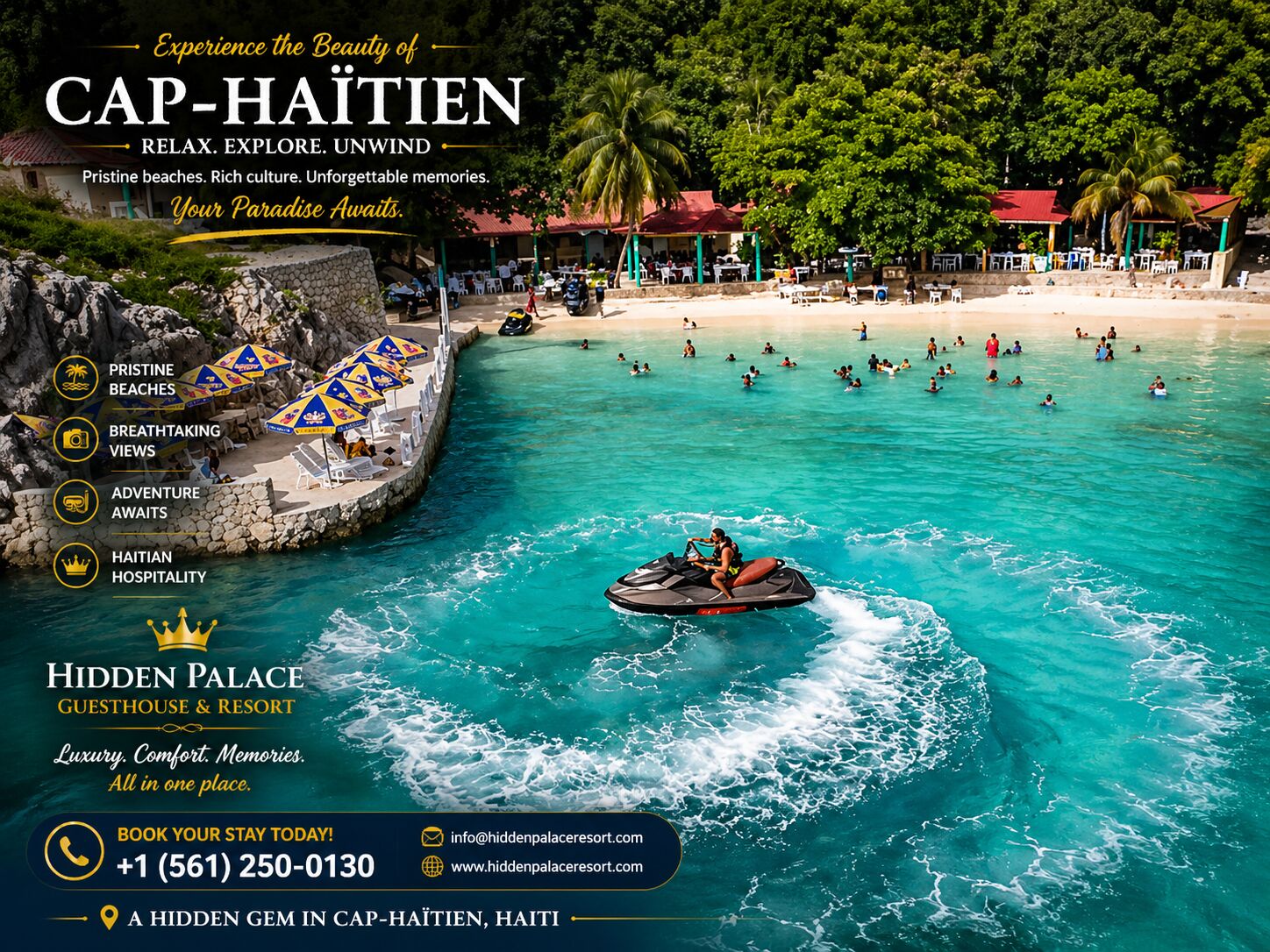
- Hidden Palace Guesthouse & Resort: Right on RN #1 in Vaudreuil. Secure suites, airport pickup, and concierge excursion booking.

03. Master Cap Haitien Transportation
Cap Haitien moves on its own rhythm.
No Uber. No reliable transit app. No rigid schedules. Understand the system before you arrive or you will overpay and get stranded.
- Tap-Taps: 50-100 gourdes ($0.50-$1). Colorful shared minibuses. Crowded and confusing for newcomers. Best for short daytime hops with a local.
- Moto-Taxis: 100-200 gourdes ($1-$2) for city rides. Fast but helmets are rare. Use only for short daytime trips.
- Private Taxis: $10-20 per trip. Negotiate the fare before you get in. Book through your accommodation for fixed pricing.
- Car Rental: Avis and local agencies at CAP airport. Get an SUV for the Citadelle and rural roads. Budget $40-70/day plus insurance.
- Walking: The city center is compact and walkable during daylight. Stay in populated areas.
Cap Haitien vs. Port-au-Prince: Why Smart Travelers Pick the North
| Factor | Cap Haitien | Port-au-Prince |
|---|---|---|
| Safety Level | Much safer, minimal gang activity | High risk, active gang violence |
| Airport Access | CAP airport 10 min from hotels | PAP airport chaotic, delays common |
| UNESCO Sites | Citadelle & Sans-Souci Palace | None nearby |
| Beach Access | Labadee, Cormier Plage 20-30 min | Long drives or unsafe routes |
| Tourist Setup | Growing, reliable guesthouses | Damaged, limited safe options |
| Daily Cost | $30-100/day budget | Higher security costs, inflated prices |
04. Stay Safe in Cap Haitien
Cap Haitien is significantly safer than Port-au-Prince. The city has avoided most of the gang violence hitting the capital. Locals are proud of their city’s security.
But basic travel precautions are non-negotiable.
- Pick secure lodging: Choose gated properties with 24/7 staff. Hidden Palace Guesthouse in Vaudreuil offers CCTV, security personnel, and controlled access.
- Night rules: Do not walk alone after dark. Use arranged transport for dinner. Boulevard du Cap-Haïtien along the ocean has police presence and is safer for evening meals.
- Valuables: Keep phones and cameras discreet. Use a money belt. Leave expensive jewelry at home.
- Negotiate first: Always agree on taxi and tour prices before you leave. A firm but polite tone prevents overcharging.
- Stay connected: Share your itinerary with hotel staff. Get a local SIM or eSIM for reliable connectivity.
- Emergency prep: Know the nearest police station. Carry your hotel contact info in Creole and French.
05. What You Will Actually Spend in Cap Haitien
Cap Haitien is cheaper than most Caribbean destinations. But rookie mistakes turn “cheap” into expensive fast.
Here is the honest breakdown based on January 2026 data:
- Budget traveler: $20-40/day (dorm bed $7-15, street food $2-5, tap-taps $0.50-1)
- Comfortable traveler: $80-150/day (private guesthouse $60-100, restaurant meals $10-20, private transport $15-30)
- Luxury experience: $200+/day (suite accommodation, private driver, guided excursions, fine dining)
- Citadelle day trip: $25-40 total (transport $10-15, entrance $5-10, guide $10-15)
- Labadee Beach day: $15-30 (transport $10-15, access fees $5-15)
Hidden costs to dodge: Uninsured car rentals (add $15-30/day for CDW), unlicensed tour guides who demand tips mid-tour, and “cheap” places without generators during power outages.
06. Your Cap Haitien Packing Checklist
Temperatures stay between 82-90°F year-round with high humidity. Pack for tropical conditions plus a few surprises:
- Clothing: Lightweight, breathable fabrics. Long sleeves for sun and mosquito protection. One semi-formal outfit for upscale dining.
- Footwear: Sturdy hiking shoes (non-negotiable for the Citadelle), sandals for the beach, closed-toe shoes for city walking.
- Sun protection: SPF 50+ sunscreen (expensive locally), wide-brim hat, UV-blocking sunglasses.
- Health kit: Prescription meds (bring extra), anti-diarrheal pills, rehydration salts, DEET insect repellent, water purification tablets.
- Tech: Universal adapter (110V, US-style plugs), power bank, offline maps downloaded, portable Wi-Fi hotspot for long stays.
- Documents: Passport copies (digital and physical), travel insurance, hotel confirmations, emergency contacts.
- Money: $300-500 in mixed small bills, one credit card for emergencies only.
07. When to Visit Cap Haitien
Timing affects everything. Weather, crowds, prices, and hiking conditions all change with the season.
- Dry season (Nov-Mar): Best weather, minimal rain, perfect for Citadelle hiking. Peak crowds and prices in December-January. Book 2-3 months ahead.
- Shoulder season (Late Nov, Early Mar): Great weather, lower prices, fewer tourists. Our top recommendation.
- Wet season (May-Oct): Heavy afternoon showers, slippery trails, fewer events. Accommodation prices drop 30-40%. Good for budget travelers who do not mind humidity.
- Festivals: Carnival (February), Rara (Easter week), and Fête de la Musique (June) offer deep cultural immersion but require early booking.
08. Must-See Attractions Near Cap Haitien
Cap Haitien is the gateway to northern Haiti’s world-class historical and natural sites. Do not miss these:
- Citadelle Laferrière (1.5 hours): The largest fortress in the Americas. UNESCO World Heritage site. Hike or ride horseback to the 3,000-foot summit. Plan a full day. Entrance $5-10 plus guide $10-15.
- Sans-Souci Palace (1.5 hours): Ruins of King Henri Christophe’s royal residence next to the Citadelle. Hire a guide for the full story.
- Labadee Beach (25 min): Crystal-clear Caribbean waters. Arrive early to beat cruise ship crowds. Local food stalls serve grilled seafood.
- Cormier Plage (20 min north): Quiet resort beach with excellent lobster salad and grilled fish. Tennis courts available.
- Bassin Bleu (1 hour): Stunning natural blue pools perfect for swimming. Best during dry season when water is clearest.
- Place d’Armes & Cathedral: Colonial architecture in the city center. Safe to explore during daylight. Free.

Stay Smart. Book the Right Place First.
Hidden Palace Guesthouse & Resort sits on RN #1 in Vaudreuil. You are 10 minutes from the airport, 20 minutes from Labadee, and you get a secure base for exploring all of northern Haiti.
Check Availability on Airbnb Explore the Property🔗 More Cap Haitien Guides
Best neighborhoods, guesthouses, and hotels for every budget
Getting from CAP airport to your accommodation safely
Current safety situation and traveler precautions
Luxury suites, ocean views, and secure Vaudreuil location
Host your dream wedding at Hidden Palace in Cap Haitien
Corporate events, parties, and celebrations in Vaudreuil
Best bars, clubs, and evening entertainment in Cap Haitien
Top dining spots and local cuisine recommendations
Frequently Asked Questions: Cap Haitien Haiti Travel Tips
Real questions from first-time visitors, answered with current 2026 info.
Cap Haitien is much safer than Port-au-Prince and is considered the safest major city in Haiti for tourists. The city has avoided most of the gang violence hitting the capital. Stay in secure accommodations like Hidden Palace Guesthouse in Vaudreuil, plan airport transfers in advance, avoid walking alone at night, and use trusted transportation. Keep valuables secure, agree on taxi fares beforehand, and stay aware of your surroundings. Most travelers feel comfortable exploring during daylight hours.
The Vaudreuil district is the best area for first-time visitors. Located on Route Nationale #1 just 10-15 minutes from Hugo Chávez International Airport (CAP), it offers secure, comfortable guesthouses like Hidden Palace Guesthouse & Resort with private parking, gated access, and proximity to both the airport and city center. Unlike downtown hotels, Vaudreuil properties give you tranquility, ocean views, and reliable amenities while keeping you connected to major attractions like the Citadelle Laferrière and Labadee Beach.
The most reliable option is pre-booking an airport transfer through your accommodation. Hidden Palace Guesthouse offers scheduled pickup service from Hugo Chávez International Airport (CAP). Alternatively, taxis are available outside the terminal for approximately $10-20 USD to the city center, but always confirm the fare before departing. Moto-taxis cost $1-2 for solo travelers with light luggage but are less safe. Avoid unlicensed drivers who approach you inside the terminal. Car rental is available from Avis and local agencies if you prefer independent travel, though driving in Haiti requires confidence due to road conditions.
Pack lightweight, breathable clothing for tropical temperatures (82-90°F year-round). Essentials include: sturdy walking shoes for the Citadelle hike, sun protection (hat, SPF 50+ sunscreen, sunglasses), insect repellent, a universal power adapter (110V, US-style plugs), cash in small US dollar bills (ATMs are unreliable), a portable water filter or purification tablets, any prescription medications (pharmacies may not stock specific brands), and a copy of your passport. Bring a daypack for excursions and consider packing a light rain jacket if visiting during the wet season (May-October).
Daily budgets in Cap Haitien range from $30-50 for backpackers to $100-200 for comfortable travel. Accommodation: $15-25 (budget guesthouse) to $80-150 (mid-range with amenities). Meals: $2-5 (street food/local eateries) to $10-20 (restaurants). Local transport: $0.50-2 (tap-taps/moto-taxis) to $10-20 (private taxis). Citadelle entrance: $5-10 plus $10-15 for a guide. Airport transfer: $10-25. Budget $50-100 per day for a comfortable experience including quality accommodation, good meals, and organized excursions.
The best time to visit Cap Haitien is during the dry season from November to March, when temperatures range from 68-88°F with minimal rainfall—ideal for hiking the Citadelle Laferrière and exploring Sans-Souci Palace. December and January are peak months with higher prices and more tourists. Shoulder months (late November, early March) offer the best balance of good weather, lower costs, and fewer crowds. Avoid the wet season (May-October) when heavy showers, humidity, and slippery trails can disrupt travel plans, though accommodation prices drop significantly.
Most visitors including US, Canadian, and EU citizens can enter Haiti without a visa for stays up to 90 days. You need a valid passport with at least 6 months remaining validity, a return or onward ticket, and proof of accommodation. A $10 tourist fee is payable upon arrival at Hugo Chávez International Airport. Check current requirements with the Haitian embassy before travel as regulations can change. Ensure your passport is stamped correctly on entry to avoid issues when departing.
The UNESCO World Heritage Citadelle Laferrière is the crown jewel—a massive 19th-century fortress perched 3,000 feet above sea level requiring a 1.5-2 hour hike or horseback ride. Nearby Sans-Souci Palace ruins offer insight into King Henri Christophe’s reign. Labadee Beach provides crystal-clear Caribbean waters 25 minutes from the city. Cormier Plage Resort offers excellent seafood 20 minutes north. Bassin Bleu features stunning natural blue pools perfect for swimming. The colonial architecture of Place d’Armes and the Cathedral of Cap-Haïtien showcase the city’s French heritage. Plan 2-3 days minimum to experience the major sites.
Your Cap Haitien Adventure Starts with the Right Base
Do not leave your accommodation to chance. Hidden Palace Guesthouse & Resort in Vaudreuil offers the security, comfort, and local expertise that transforms a trip into an experience.
Call us: +1 (561) 250-0130
Reserve Your Dates Now